How Rwanda's Infrastructure Push Is Reshaping Land Values for Diaspora Buyers in Late 2026
If you are investing in Rwanda from abroad, the map you studied six months ago no longer matches the ground under your feet. Across the country, new highways are shortening journeys that once took half a day, power substations are reaching districts that relied on generators, and water mains are following the same corridors. For a diaspora buyer evaluating where to place capital, these are not abstract headlines — they are the practical signals that separate a plot with long-term utility from one that remains stranded.

Why Infrastructure Moves Land Prices
Land value in Rwanda follows a simple rule: accessibility + utilities = liquidity. A plot 40 kilometres from Kigali on a dirt road trades at a fraction of the same-size plot on a newly paved highway with three-phase power at the boundary. The district land office records confirm this — transaction prices in sectors that received tarmac and grid connections in 2023–2024 appreciated 18–22% annually, while neighbouring sectors without upgrades saw 6–9% growth.
The mechanism is straightforward. Developers and end-users both need certainty: can I get construction materials to the site? Will the future house have reliable electricity and water? Can tenants or buyers reach the property year-round? Each "yes" removes a discount the market applies to raw land.
The Corridors Moving Fastest in Q4 2026
Kigali–Bugesera–Nemba (RN3 & RN4 Upgrades)
The dual-carriageway extension from Kigali toward Bugesera International Airport is the single biggest value driver for eastern land. Sectors along RN3 — Gashora, Rilima, Ntarama, Mayange — have seen plot sizes of 700–1,000 sqm transact between RWF 3,500 and 5,200 per sqm in the last quarter. A year ago the same bands were RWF 2,800–4,000. The airport's phased opening (cargo first, passenger terminal Q1 2027) and the adjacent Special Economic Zone are pulling logistics, light manufacturing, and hospitality demand toward the corridor.

Kigali–Rusizi (Western Corridor via RN1/RN5)
The western road rehabilitation — particularly the Karongi–Rusizi stretch — is unlocking Lake Kivu lakefront and hillside plots that were previously 5–6 hours from Kigali. Travel time is now 3.5–4 hours. Diaspora buyers targeting tourism rentals (Airbnb, boutique lodges) are entering Nyamasheke and Rusizi districts at RWF 2,500–3,800/sqm for lake-view land, up from RWF 1,800–2,600 twelve months ago.
Northern Ring: Musanze–Rubavu (RN4 & Volcanoes Access Roads)
Gorilla tourism recovery has pushed Musanze district prices to RWF 4,500–6,500/sqm for plots within 10 km of the park entrance. The new Rubavu–Musanze tarmac link cuts the lake-to-volcanoes circuit to 45 minutes, creating a dual-destination rental model (lake morning, gorilla trek afternoon) that investors are actively pricing in.
How to Read the Signals Before You Buy
- Check the District Physical Plan (DPP). Every district publishes a DPP showing planned road reserves, utility corridors, and zoning. Plots inside a future road reserve are high-risk — compensation is paid at pre-road value. Request the DPP extract from the district land bureau before signing.
- Verify utility connection status. "Power available" on a listing often means a transformer 2 km away. Ask for the Reg (Rwanda Energy Group) connection quote — it states the exact distance to the nearest LV line and the cost to extend. Budget RWF 2–5 million per kilometre for three-phase extension.
- Track Rwanda Transport Development Agency (RTDA) tender awards. RTDA publishes awarded road contracts quarterly. A newly awarded lot in your target sector is a 12–18 month leading indicator for price movement.
- Cross-check with WASAC water master plans. Water follows roads but lags 6–12 months. A sector with a new tarmac road but no water mains yet will see the next jump when WASAC commissions the line.
Common Diaspora Buyer Mistakes in 2026
- Buying on "future road" hearsay. Only RTDA-gazetted and funded projects count. Politician promises at rallies do not.
- Ignoring slope and soil. A cheap lakeside plot on 35% slope with black cotton soil will cost 2–3× more to build on than a mildly sloping red-laterite plot 200 m inland. Get a geotechnical report (RWF 300–500k) before committing.
- Overpaying for "airport proximity" without checking flight paths. The Bugesera airport approach corridors are gazetted. Plots directly under the approach path face height restrictions and noise — check the Rwanda Civil Aviation Authority zoning map.
- Assuming freehold = instant resale. Freehold title is clean, but liquidity still needs a buyer pool. Sectors with active developer interest (gated communities, student housing near universities, tourism zones) resell in 30–90 days. Purely agricultural sectors can sit 12–24 months.
A Practical Due-Diligence Checklist for Remote Buyers
Week 1 (desk research):
- Pull the sector's last 20 land transactions from the district land office (public register, request via email).
- Map the plot on the Rwanda Land Management Portal (RLMP) — confirm boundaries, encumbrances, and title status.
- Overlay RTDA and WASAC project maps (both publish PDFs quarterly).
Week 2 (local verification — use a trusted agent or lawyer):
- Physical site walk: boundaries, neighbours, access road condition, drainage, flood marks.
- Neighbour interviews: any boundary disputes, community issues, planned community projects.
- Reg and WASAC connection quotes in writing.
Week 3 (legal):
- Title search at the Land Registry (now digital — 24-hour turnaround).
- Sale agreement drafted by a Rwandan advocate; include conditions precedent for utility quotes and boundary confirmation.
- Power of attorney for the agent to complete transfer at the sector land bureau.
Price Framework for Late 2026 (Per Sqm, Road-Frontage, Serviced)
| Corridor / Sector | Range (RWF/sqm) | Primary Driver |
|---|---|---|
| Bugesera–Gashora (RN3) | 3,800–5,200 | Airport, SEZ, logistics |
| Bugesera–Rilima/Ntarama | 3,200–4,500 | Airport spillover, residential |
| Rwamagana–Munyiginya | 2,800–3,800 | Industrial park, Kigali commuter belt |
| Musanze (Volcanoes proximity) | 4,500–6,500 | Gorilla tourism, hospitality |
| Rubavu (Lake Kivu lakefront) | 5,000–8,000 | Lake tourism, weekend homes |
| Karongi (Lake Kivu mid-lake) | 2,500–3,800 | Tourism, retirement homes |
| Rusizi (southern Lake Kivu) | 2,200–3,500 | Cross-border trade, tourism |
| Nyagatare (Eastern cattle corridor) | 800–1,500 | Agribusiness, ranching |
| Kirehe (Akagera proximity) | 1,000–1,800 | Park tourism, conservation enterprises |
Note: Prices are indicative asking rates for titled, road-frontage plots with grid power within 500 m. Negotiated transaction prices typically 5–12% below ask. Inland plots (no road frontage) trade at 40–60% of frontage rates.
The Bugesera-Gashora Case: A Live Example
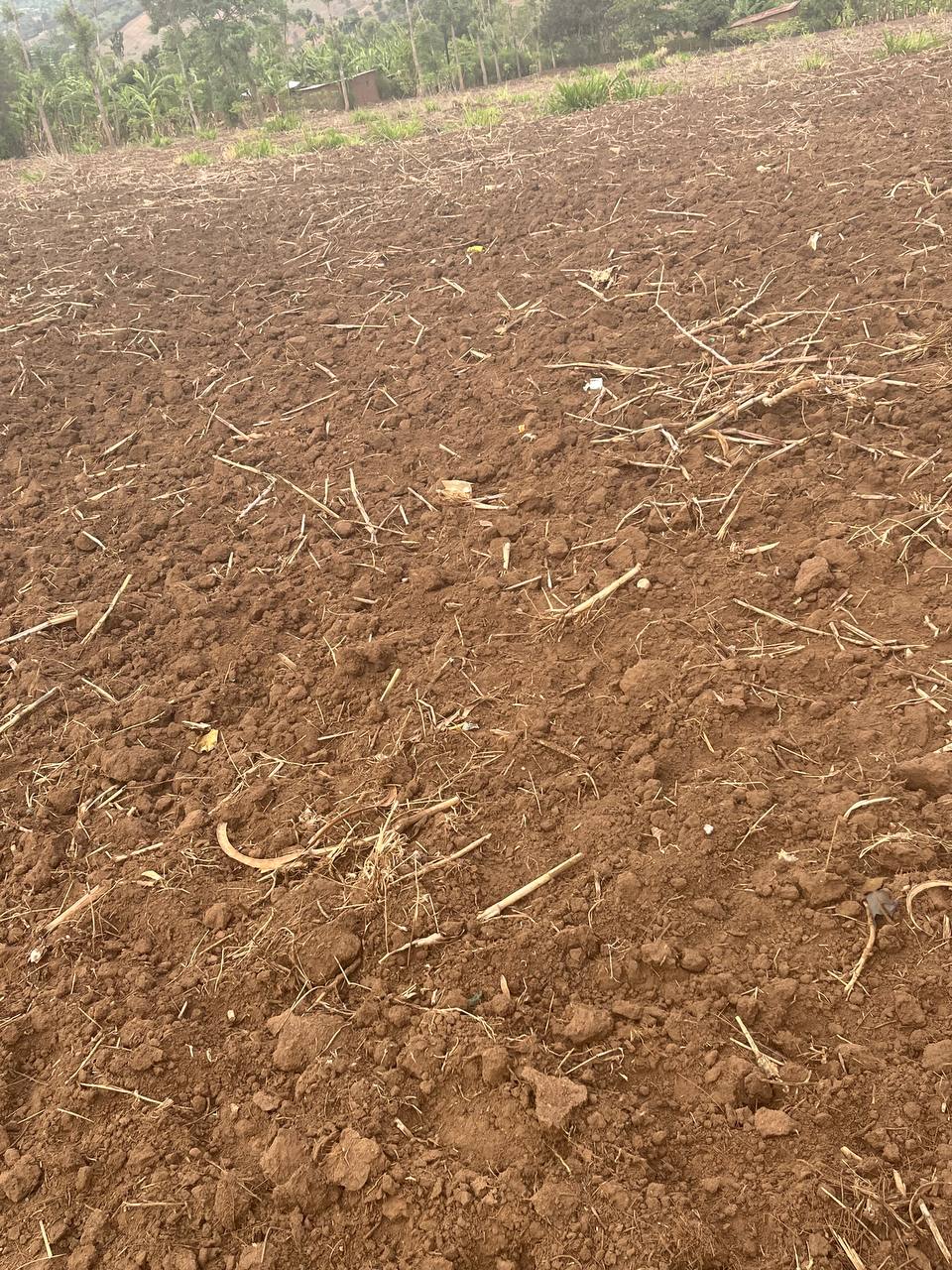
Our current listing — an 11,860 sqm parcel in Bugesera-Gashora priced at RWF 45,000,000 firm (RWF 3,795/sqm) — sits directly on the upgraded RN3 tarmac, 85 m road frontage, three-phase power at the boundary, and municipal water commissioned in March 2026. The same sector's average asking rate for comparable frontage is RWF 4,200–4,800/sqm. The discount reflects a motivated seller, not a defect. Title is freehold, rates paid, no encumbrances. This is the profile diaspora buyers should target: infrastructure already delivered, price below corridor average, clean paperwork.
Final Word: Move With the Infrastructure, Not the Hype
Rwanda's land market rewards buyers who follow the concrete — paved roads, commissioned substations, flowing water mains — not the press releases. The corridors above have delivered infrastructure in 2024–2025; their price adjustment is underway but not exhausted. Sectors where contracts were only awarded in mid-2026 are the next wave (18–24 month horizon).
For a diaspora buyer, the disciplined approach is: pick a corridor with live infrastructure, verify every utility and legal detail on the ground, negotiate from data (not asking prices), and close with a Rwandan advocate handling the transfer. The window where Bugesera-Gashora, Musanze, and Rubavu frontage trades below RWF 5,000/sqm is narrowing — the next RTDA and WASAC commissioning cycles will reset the baseline.
Contact: +250 722 265 072 / +250 787 806 728 | twahijohn2016@gmail.com | firstandeasygo.com
Labels: Rwanda, Rwanda Real Estate, Rwanda Land, Land for Sale, Investment, Kigali, Bugesera, Lake Muhazi, Musanze, Hotel Development, Diaspora Buyers, Property Management, First And Easy Go
Plots is expensive now in Rwanda
ReplyDelete